

Driving Climate Action and Accelerating the Energy Transition
Our Approach
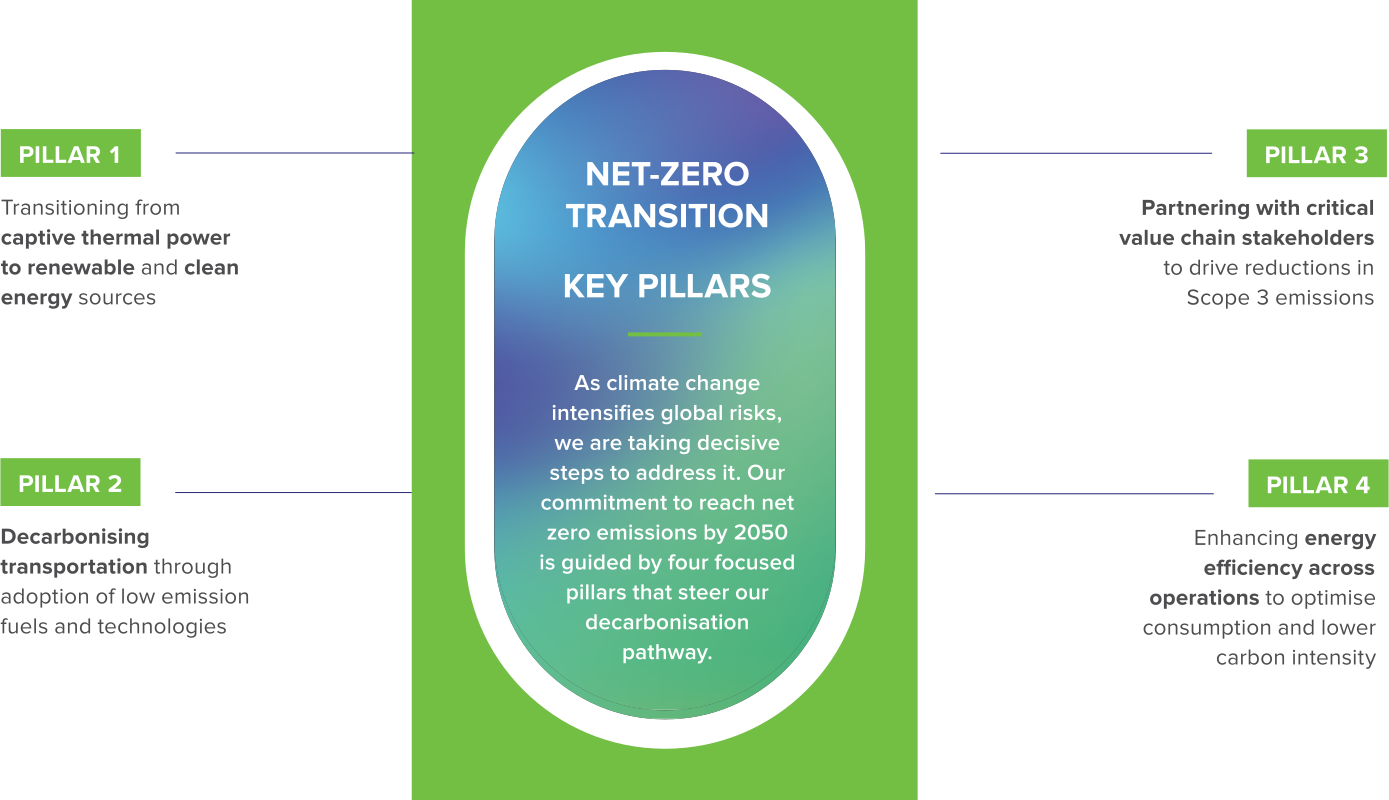
Our Energy and Climate Change Policy focuses on adopting best practices in energy management, complying with regulatory requirements, and supporting the Paris Agreement and global climate goals. The policy drives measurement and reduction of Scope 1, 2 and 3 greenhouse gas emissions, increased use of renewable energy, and a clear roadmap to achieve SBTi-approved net-zero emissions by 2050.
We integrate climate considerations into strategy, risk management, and investment decisions. By promoting energy efficiency, innovation, and low-carbon technologies, we aim to reduce carbon intensity, strengthen climate resilience, and contribute to a sustainable, low-carbon future. This approach is backed by transparent disclosures aligned with global frameworks and active collaboration with stakeholders.
Integrating Climate Risk Into Business Strategy
Climate-related risk considerations are integrated into our strategic planning and long-term financial and operational decision-making to strengthen our ability to anticipate disruptions, safeguard value, and maintain competitiveness in a rapidly changing global environment. We use structured risk assessment frameworks aligned with global standards to evaluate transition risks, physical climate threats, policy changes, and evolving stakeholder expectations. These insights influence capital allocation, energy strategy, asset design, and operational planning, ensuring that climate resilience is embedded across every stage of the business.
Physical risk & transition risk assessment
Hindustan Zinc has identified and classified climate-related risks and opportunities across short-, medium- and long-term horizons. These include both physical risks (e.g., rising temperatures, droughts, floods, and extreme weather) and transition risks (e.g., policy shifts, technological changes, market dynamics, and reputational impacts). In line with IFRS S2 recommendations, we used scenario analysis to assess these risks. Our strategy incorporates and addresses a broad range of climate risks and opportunities, mapped across 2030 and 2050 timeframes. We conducted baseline assessment of our business units by using ThinkHazard tool to assess potential baseline physical risks.
Mitigation/adaptation of physical climate change risks
Hindustan Zinc undertook multiple initiatives to mitigate and adapt to identified risks and opportunities across our operations. These initiatives encompass climate and environment-related issues and include:
Climate Action Report
Hindustan Zinc's Climate Action Report (CAR) provides detailed insights into the Company's climate change strategy and actions taken to mitigate its impacts. It also presents clear progress towards the climate change goals, including the performance against targets and the implementation of the relevant projects.
 Refer Climate Action Report 2025 for more details.
- Increasing renewable energy
- Driving energy efficiency improvements
- Responsible water usage by reducing freshwater consumption
- Adopting circularity measures for efficient waste management
- Implementing nature conservation actions
Pillar 1
Accelerating the transition to clean energy
We've been driving a transformative shift towards renewable energy over the past few years. Our green power portfolio includes wind, solar, and waste heat recovery power, with continuous renewable energy capacity expansion, aligned with our greenhouse gas reduction targets. To further accelerate our progress toward SBTi targets, we procure renewable energy through strategic power purchase agreements.
Key Highlights in FY2026
- Our green power portfolio: 273.50 MW of non-captive wind power, 40.70 MW of captive solar power, and 63.10 MW of waste heat recovery power
- 100% green power at our Pantnagar Metal Plant, helping us cut emissions by over 30,000 tCO₂e each year
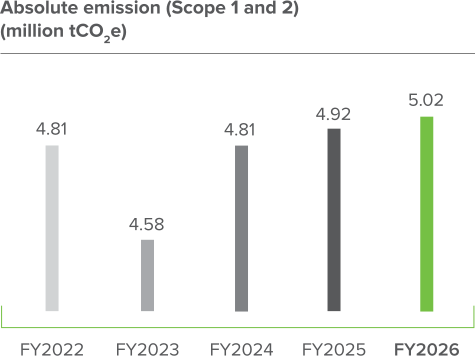
- Received 519 MU of renewable power from 530 MW round-the-clock renewable energy (RE-RTC) power agreement with Serentica India Renewables Limited, increasing our renewable power share to c.18% (including captive RE) and abating GHG emissions by 0.83 million tCO₂e
Advancing Zinc-Ion Battery Technology
As part of our continued collaboration with Indian Institute of Technology (IIT) Madras and Jawaharlal Nehru Centre for Advanced Scientific Research (JNCASR), we are working on advancing the development of next-generation battery storage solutions. JNCASR has developed and demonstrated a zinc-ion pouch cell prototype. In parallel, IIT Madras is working on developing a zinc-air battery prototype and has successfully demonstrated it at lab scale, with ongoing work focused on vehicle-level demonstration as a range extender. These collaborations aim to enhance the viability of zinc-based batteries for a sustainable energy future.
EcoZen - Asia's First Low Carbon Zinc
Hindustan Zinc launched EcoZen, Asia's first low carbon zinc brand, certified through life cycle assessment (LCA), which sets a new benchmark for sustainability in the industry. Produced using 100% renewable energy, EcoZen achieves over 75% lower carbon emission than conventional zinc. It is enabling greener manufacturing and accelerating low carbon supply chains across key sectors including automotive, renewables, and infrastructure. During the year, the Company strengthened partnerships with multiple customers for scaling the adoption of EcoZen across galvanised steel production, facilitating transition to lower Scope 3 emission.
Pillar 2
Transforming mining & logistics with clean mobility
We expanded electric mobility across our operations, with 3 underground battery-electric vehicles (UG BEVs) and 52 EVs in inter-unit transport to cut emissions and advance our SBTi aligned decarbonisation goals. We are in the process of deploying electric buses for employee commute.
Strengthening clean mobility beyond mining, we also initiated one of India's largest green logistics transitions in partnership with GreenLine Mobility Solutions. Through a ₹ 400 crore investment, the collaboration will deploy 100 electric trucks with battery swapping infrastructure and add 100 liquified natural gas (LNG) trucks, significantly accelerating progress towards a fully decarbonised supply chain and our Net Zero 2050 vision.
These clean mobility upgrades are reducing diesel reliance, improving underground air quality and strengthening both operational efficiency and our pathway to Net Zero.

Pillar 3
Building a net zero ready value chain
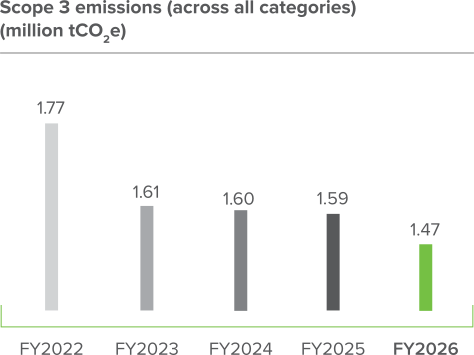
Achieving our climate ambitions requires progress across the entire ecosystem we operate in. This year, we deepened engagement with key suppliers and partners to accelerate Scope 3 decarbonisation and build shared understanding of emerging ESG expectations. Through our "Wednesdays for Transition" learning series, we delivered focused capacity building sessions on climate action, ESG strategy, materiality, net zero pathways, water stewardship, waste and biodiversity management, and human rights practices.
By equipping value chain partners with the knowledge and tools needed for sustainable transformation, we are creating a more resilient, responsible and future-ready supply network. This collaborative approach not only strengthens our environmental performance but also embeds lasting sustainability practices well beyond our operational boundary.
 For further information, refer the chapter 'Responsible Sourcing'.
Pillar 4
Driving energy efficiency for a low-carbon future
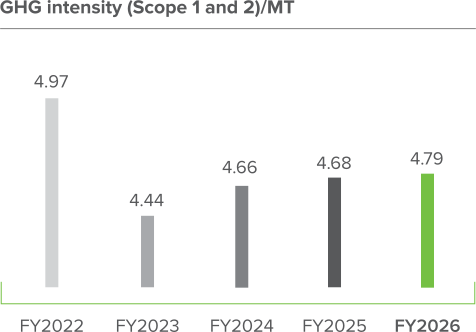
We continued to prioritise energy efficiency across our operations by upgrading equipment, refining processes, and deploying advanced digital technologies that support our long-term net zero pathway.
Key initiatives include-
- Energy optimisation in compressor systems, saving up to 1,435 GJ
- Reduction in power consumption of drill machines by increasing utilisation, saving up to 1,600 GJ
- Reduction of idle running of dust conveying system, saving 1,887 GJ
- Reduction in energy consumption of compressors in all mines, saving up to 4,300 GJ
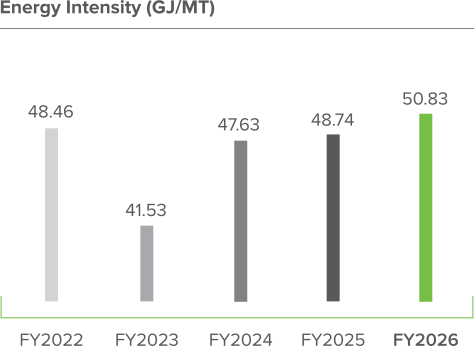
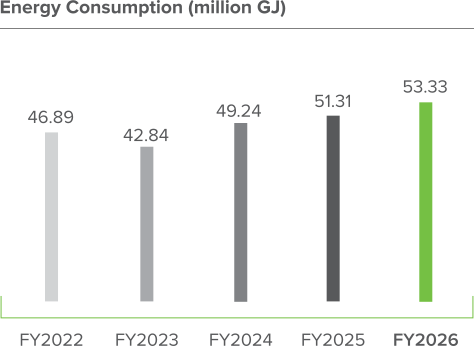
These actions enhanced smelting and process heat performance, reduced overall energy intensity, and lowered operating costs. By embedding efficiency into every stage of production, we are strengthening operational resilience while advancing the transition to a cleaner, greener future.
of energy savings achieved in FY2026 through variable-frequency drive (VFD) installations, high-efficiency system upgrades, and AI-powered real-time optimisation.

Hindustan Zinc conducted a 'Life Cycle Assessment' study in line with ISO 14040:2006 (and its amendment 14040:2006/Amd 1:2020) and ISO 14044:2006, using a cradle-to-gate approach for their zinc, lead, and silver products. The study establishes baseline impact of 'Production of 1 tonne of Average Special High-Grade Zinc, 1 tonne of Average Refined Lead and 1 tonne of Refined Silver Product' for the Hindustan Zinc facilities.
LCA Objectives
This study maps environmental impacts from raw material extraction to material production for three products from various routes and across all sites of Hindustan Zinc. It also helps evaluate the savings potential, which can further be used for setting sustainability targets or communication to the stakeholders. LCA is instrumental in:
- Assessing the environmental impacts associated the production for zinc, lead, and silver over a cradle-to-gate system boundary
- Internal decision-making by operational and management teams, using product-level footprint data
- Optimisation and improvement of the production processes
- Competing with materials that disclose their product-related environmental information into the marketplace, enabling access to a new & potential customer base
- Identifying key areas for improvement, prioritising actions to reduce environmental impacts and comparing outcomes against benchmarks and best available technologies to drive continuous improvement
- Objectively analysing different future scenarios, possible alternatives, and their life cycle implications
Key Applications
Life cycle inventory and impact assessment results have been used for internal and external benchmarking against best available technologies across key impact indicators. The LCA outcomes are aggregated and used for public communication to the customers, downstream/end users, and other stakeholders to showcase the environmental performance of our products.
LCA Recommendations Enabling Future Action
Key recommendations provided to the Company to reduce environmental impact include:
- Transition to renewable energy sources, such as solar, wind, and hydro power, to mitigate the global warming potential associated with electricity consumption
- Partial or complete substitution of fossil fuels with biomass, briquettes, or biofuels
- Optimise resource utilisation for waste reduction and improved product yield

Continuous Improvement
In FY2026, external experts conducted an LCA workshop, covering LCA principles, ISO 14041/44 and their critical role in minimising carbon footprint. This workshop builds the capacities of our internal energy, environment, and R&D teams on conducting LCA, analysing and interpreting the results.
Scaling Growth With Decarbonisation at the Core
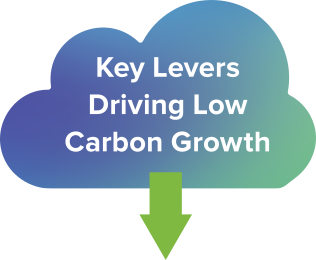
As Hindustan Zinc progresses towards doubling its capacity to meet surging global demand for critical minerals, decarbonisation continues to guide every aspect of this growth. Each new expansion is being engineered to align with our SBTi approved net zero pathway, shaping a larger, more competitive business, designed for a low carbon future.
energy adoption
development
clean technologies
greener logistics
mining operations
collaboration
efficient systems