

At Hindustan Zinc, responsible sourcing is embedded at the core of our value creation approach and aligned with the International Council of Mining and Metals (ICMM) Mining Principles. Our supply chain strategy integrates ESG considerations across procurement decisions, ensuring that materials, services, and operations are sourced responsibly and support sustainable, efficient, and resilient production systems. We adopt a risk and opportunity-based approach across our supplier network to strengthen transparency, mitigate supply chain risks, and enhance long-term resilience.
Capitals impacted


Stakeholders affected

UN SDGs
Supply Chain Performance in FY2026
Our Approach Towards Responsible Sourcing
Hindustan Zinc's Sustainable Sourcing Policy applies to all immediate business partners including service and supply partners. Our business partners are required to comply with the Suppliers Code of Conduct. A robust Suppliers Due Diligence Procedure ensures adherence to these standards, aligns our valued business partners with our sustainability goals, and promotes a culture of responsibility across the value chain.
Further, our responsible sourcing approach is guided by a structured Procurement Rulebook that standardises sourcing processes, approval mechanisms, and supplier evaluation criteria across business units. Our integrated Vendor Management System enables centralised supplier onboarding, risk profiling, compliance tracking, and periodic performance assessments to ensure consistent oversight. Guided by ISO 20400, we embed ESG parameters into supplier pre-qualification, due diligence, contractual obligations, and ongoing performance reviews. For further information, refer our microsite – Sustainability | Supply Chain Management.
Sustainable Sourcing Policy
Our sustainable sourcing policy aligns our business partners with our sustainability priorities, fostering accountability and responsible conduct. It establishes clear environmental, social, and ethical standards for suppliers and contractors, while outlining our approach to identifying and mitigating health, safety, and environmental (HSE) risks within the supply chain. The policy also reinforces our zero-tolerance stance towards human rights violations and promotes responsible business practices among our partners. Access our Sustainable Sourcing Policy here.
Our Supplier ESG Expectations document further outlines the environmental, social, and governance principles that business partners are encouraged to adopt and integrate within their operations.
At Hindustan Zinc, collaboration with business partners is central to advancing responsible production outcomes, enabling proactive risk management and driving continuous improvement across the value chain. This commitment is underpinned by a robust governance framework, comprising the Supplier Code of Conduct, Sustainable Sourcing Policy, Supplier Sustainability Management Policy, and Supply Chain Strategy. Together, these frameworks establish rigorous standards and set clear expectations for ethical business conduct and responsible sourcing, supporting a transparent, resilient, and future-ready supply chain aligned with ICMM principles.

Supplier Code of Conduct
Hindustan Zinc's Supplier Code of Conduct serves as the mandatory governing framework for all business partners, including material suppliers, contractors, and service providers. It establishes a firm baseline for ethical engagement, ensuring every partner mirrors our values, operational principles, and sustainability commitments.
By integrating fundamental conventions of the International Labour Organisation (ILO), the principles of the United Nations Universal Declaration of Human Rights, the International Council on Mining and Metals (ICMM) principles, and prevailing industry norms, we ensure our operations align with the global best practices.
Our Supplier Code of Conduct addresses critical areas such as labour and human rights, occupational health and safety, environmental stewardship, business integrity, and regulatory compliance. It reinforces a zero-tolerance approach towards corruption, bribery, fraud, and insider trading, while emphasising robust grievance redressal mechanisms, environmental responsibility, climate considerations, and adherence to all applicable laws and regulations. Adherence to the Code is mandatory for all suppliers and forms an integral part of our responsible sourcing approach.
Our governance extends beyond our direct vendor network; we encourage suppliers to cascade these standards throughout their own supplier networks. Developed through collaborative engagement with customers, suppliers, group companies, and external stakeholders, the Code ensures relevance and effectiveness.
This year, we strengthened our Supplier Code of Conduct to include psychological and psychosocial well-being, ethical compliance, community engagement, risk-based procurement practices, and quality assurance. These enhancements align our supply chain with the evolving sustainability priorities and stakeholder expectations, promoting a culture of accountability and continuous improvement.
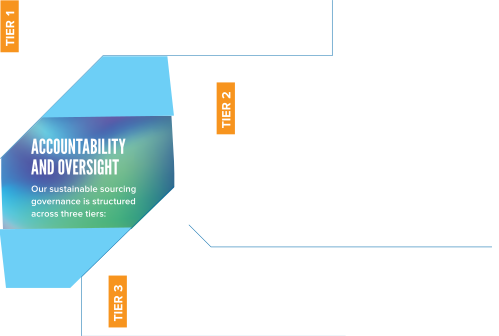
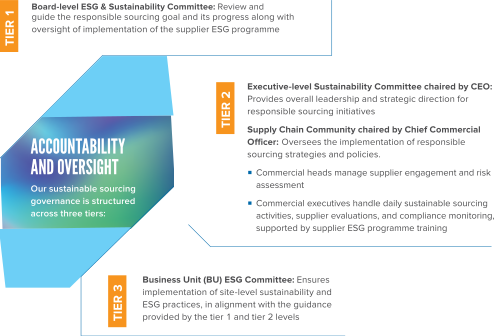
Governance and Oversight
Supplier Onboarding and Management
Hindustan Zinc has established a structured supplier management and onboarding framework to systematically identify, evaluate, and onboard the relevant partners.
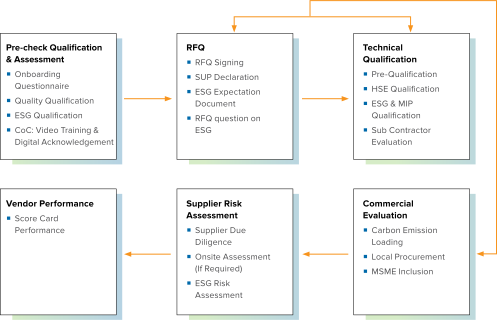
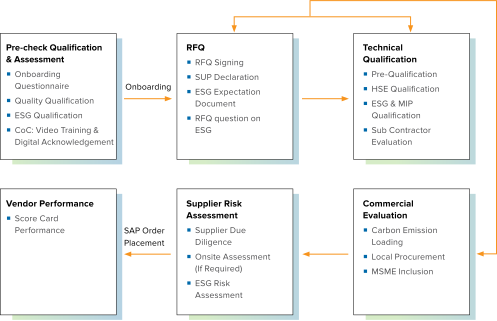
Business Partner Identification, ESG Assessment & Screening
- 1Identification of potential business partners (BPs) through market research, consultation, expression of interest (EOI), online searches, and direct outreach
- 2BP screening based on the ESG, quality & business relevance
- 3Considering country, sector, and commodity-specific risks during BP screening
- 4BP registration questionnaire with commitment to ESG criteria, along with evaluation & approval by designated authorities
- 5ARIBA supplier lifecycle and performance (SLP) module
- 6Pre-qualification questionnaire for screening BPs for minimum compliance requirement
BP Monitoring
- 1Performance is assessed against compliance and ESG criteria, linking BP payments to safety and statutory adherence. A penalty/incentive system further drives productivity and safety across all locations
- 2Regular monitoring of data such as greenhouse gases (GHGs), climate & water risks, etc., for key contracts, covering safety, human rights, and environmental compliance
- 3Regular contractor field safety audits (CFSAs) for on-site service contractors to promote health, safety, environment & social (HSES) governance practices
- 4Integrated performance module in ARIBA to track BP performance on quality and delivery, facilitating corrective actions, when necessary
Supplier ESG Programme
Sustainable Supply Chain Programme
Hindustan Zinc has initiated a sustainable supply chain programme to foster a responsible and sustainable ecosystem across its supplier network.
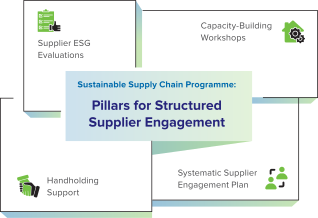

Key Highlights of the Programme in FY2026
Supplier Evaluation
Drawing upon the Global Reporting Initiative (GRI), Business Responsibility and Sustainability Reporting (BRSR), International Council on Mining and Metals (ICMM), and other relevant national & international standards, the Company comprehensively assessed 50+ critical suppliers to assess their ESG practices and alignment with established standards. Based on the assessment results, suppliers are categorised into three ESG maturity levels – Foundational, Intermediate, and Leading.
Supplier at Leading and Intermediate Stages
Receive constructive feedback and recommendations to further strengthen their ESG practices and enhance alignment with the Company's sustainability expectations.
Suppliers at Foundational Stage
- Provided end-to-end support through targeted guidance, capacity building, and continuous engagement, to help them build the necessary ESG systems and processes.
- Subject to quarterly check-ins to monitor progress and provide necessary guidance.
- Onsite assessment conducted wherever required to review implementation, address identified gaps, and support continuous improvement.
- 21 business partners have defined emission reduction targets
- 47 business partners have a POSH (Prevention of Sexual Harassment) policy in place
- 48 suppliers hold relevant ISO certifications
Business Partner Capacity Building Program
“Wednesday for Transition” Training Series
We conducted 12 training sessions under the “Wednesday for Transition” series, supporting business partners in strengthening their understanding and adoption of ESG best practices.
OHS Training
We provided targeted occupational health and safety (OHS) training to our contractual workforce. Through the mine vocational training centre (VTC) programme and specialised safety modules, contract workers were inducted, upskilled, and made aware of operational hazards, reinforcing adherence to the Company's safety standards and zero-harm culture.
Business Partner ESG Connects
Hindustan Zinc engaged with 16 critical business partners through business partner ESG connect sessions to strengthen alignment on sustainability priorities across the supply chain. These interactions enabled dialogue on ESG practices, communication of expectations, and encouraged partners to integrate responsible environmental, social, and governance principles into their operations.
Suppliers Risk Assessment and Corrective Actions
Our supply chain strategy is anchored in ethical, responsible, and transparent business practices. Using a structured three-step risk assessment framework that aligns with our internal policies and international standards such as ILO, ISO 14001:2015, ISO 45001:2018, we proactively identify, evaluate, and mitigate potential threats, strengthening operational resilience and ensuring alignments with our sustainability commitments.
First-Party Risk Assessment
- During onboarding, all new business partners undergo rigorous ESG self-assessment covering greenhouse gas emissions, water management, human rights, ISO certifications, etc. Partners scoring below defined thresholds are excluded, ensuring engagement with only responsible, compliant, and sustainability-aligned vendors
- All business partners undergo internal desktop-based risk assessment, and vendors found non-compliant are promptly blocked to mitigate potential risks
- We maintain robust systems to manage mineral supply chain risks, including strict responsible sourcing protocols and guidelines for conflict-affected and high-risk areas (CAHRA). Identified red flags are escalated to senior management, triggering enhanced due diligence and careful remediation
Second-Party Assessments
- We conduct targeted on-site assessments of strategic and critical business partners to evaluate their operational practices, technical capabilities, and adherence to ESG and quality standards
Third-Party Due Diligence
- In FY2026, the third-party due diligence framework was strengthened by onboarding experts to conduct detailed assessments across critical dimensions such as governance, financial health, regulatory risk, sustainability performance, and reputational standing
- Conflict-affected and high-risk area (CAHRA) risk mapping has been integrated into our third-party due diligence. In FY2026, no revenue was generated from products containing minerals sourced from CAHRA
- These assessments benchmark suppliers against leading international standards, including the expectations of the London Metal Exchange (LME) Responsible Supply Chain Guidance, the Modern Slavery Act, Responsible Minerals Initiative, and other globally recognised frameworks

Corrective Action Plans
Business partners identified as high risk are required to submit their Corrective and Preventive Action (CAPA) plans within a stipulated timeline of one year. Those failing to comply within this period are excluded from further business engagements. During FY2026, none of the suppliers were identified as high risk in ESG parameters.
Additionally, none of the Company's suppliers were identified as red flag under the OECD (Organisation for Economic Co-operation and Development) Due Diligence Guidance for Responsible Supply Chains of Minerals from Conflict-Affected and High-Risk Areas (CAHRAs).
Modernising Supply Chain Through Digitalisation
SAHYOG: Vendor Grievance Portal
Hindustan Zinc has developed SAHYOG (Support and Help for Your Grievance), a centralised Vendor Grievance Redressal Portal to strengthen supply chain governance, transparency, efficiency, and accountability. The platform provides structured support for vendors to raise concerns and ensures timely resolution through a dedicated grievance committee with predefined escalation procedures. Automated notifications and status updates improve communication and tracking.
During the year, a total of 5 grievances were received through the portal, out of which 3 were closed and 2 are under progress.
Supplier Code of Conduct Video Training Module
Hindustan Zinc introduced a Supplier Code of Conduct video training module followed by an assessment, mandating completion by all business partners to formally confirm their alignment. In FY2026, 380+ business partners completed the training and digitally acknowledged adherence to the Supplier Code of Conduct.
Procurement Automation and Digitalisation
We have strengthened our procurement capabilities by upgrading our procurement platform to a cloud-based system, enabling improved scalability, user experience, and integration. SAP-enabled controls and workflow automation have enhanced governance, compliance, and process efficiency.
Our digital ecosystem now enables robust vendor due diligence with real-time risk visibility for informed decision-making. Enhanced supplier evaluation capabilities, including video-based assessments on the ARIBA network, have further streamlined supplier onboarding.

Key Measures for Supply Chain Resilience
Local Vendor Development
Hindustan Zinc continues to promote inclusive growth by strengthening local economies in the regions where it operates.
Local Vendor Development Programme in Rajasthan and Uttarakhand
The Company introduced a Local Procurement Policy during the year to deepen engagement with businesses headquartered in states where we operate, aligning our supply chain practices with the ICMM principles. The initiative drives regional economic inclusion and supply chain resilience, strengthening our responsible sourcing practices. In line with this policy, 22% of our total procurement during FY2026 was sourced locally from the regions where we operate, reinforcing our commitment to local economic development.
A dedicated Local Procurement Development Cell was established to identify and develop potential local suppliers. The Company:
- Conducted market research to map the local procurement landscape
- Engaged with industry bodies
- Initiated site-level assessments to evaluate supplier availability and capabilities
- Screened prospective vendors, supported through capacity-building and handholding to meet Hindustan Zinc's requirements
- Continuously monitored their performance to enable effective integration into our value chain
Impact of the Programme
In FY2026, we developed 5 Local commercial vendors across key material categories reducing reliance on foreign suppliers, and supporting the local economy. This initiative promoted local enterprise, created employment opportunities, and strengthened supply chain resilience.
Illustration
A key example involved developing two local vendors for aluminium cathodes, previously sourced from foreign suppliers. The vendors were developed for end-to-end supply and fabrication, with an additional warranty. Site visits were conducted to assess production capability, quality, and compliance before onboarding, ensuring a reliable and efficient supply chain. By developing local vendors:
- Transportation distances were reduced, lowering fuel usage and carbon footprint
- Local businesses were supported and skills enhanced in the local regions of Rajasthan
- Supply chain risks were mitigated while promoting transparency, fair pricing, and healthy competition
Transition to Low Carbon Mobility
Hindustan Zinc entered strategic transport contracts with a focused mandate to transition towards cleaner fuel alternatives and battery electric vehicles (BEVs), aligning cost efficiency with sustainability goals. During the year, 42 electric vehicles (EVs) were inducted to support inter-unit transportation (IUT) of calcine and concentrate. The concentrate IUT contract demonstrated strong commercial discipline, delivering c.11% savings over the last purchase price (LPP). Consequently, our total green fleet expanded to 232 vehicles (52 electric vehicles and 180 liquified natural gas (LNG) vehicles), including prior deployments.
Further, we have entered into a strategic agreement to achieve full fleet decarbonisation, targeting 100% transition to electric trucks and progressive replacement of all diesel-operated vehicles. This initiative underscores our focus on adopting environmentally responsible mobility solutions and contributing to a low-carbon future.
Sustainable Asset Revitalisation Initiative
At Rampura Agucha Mine, we adopted circular economy approach by undertaking a strategic refurbishment of ageing filter press units. These units, operational for over two decades, had deteriorated over time, resulting in frequent breakdowns and reduced plant availability. A refurbishment-led approach was implemented, prioritising reuse and reconditioning of existing assemblies, along with selective replacement of critical components and upgrades to electrical and safety systems. This approach restored equipment performance while extending asset life significantly.
Impact
This intervention improved equipment availability from 68% to 85%, increased cake thickness from 30 mm to up to 50 mm, and enhanced throughput per cycle. Executed at approximately 42% of the cost of new equipment, it delivered a 136% return on investment and extended asset life by over 10 years. It also reduced material consumption, lowered carbon emissions, and minimised scrap generation, reinforcing sustainable and resource-efficient operations.

Alternative Product Development
This year, we initiated the development of alternate products to enhance equipment reliability, improve efficiency, and reduce total cost of ownership (TCO). At Rajpura Dariba Mine, we developed an improved mill chute liner with optimised design and material composition to extend service life and minimise downtime. Additionally, we have introduced an alternative actuated plug valve for the filter press to enhance durability and operational efficiency, contributing to overall cost savings.
Advancing Sustainable Mining with Hybrid LHD Deployment
At Rajpura Dariba Mine, Hindustan Zinc commissioned India's first underground diesel-electric (hybrid) load-haul-dump truck (LHD), the Caterpillar R2900 XE (17T), marking a key milestone in sustainable mining. The initiative was executed through a procurement-led strategy with performance-linked commercial structures and strong supplier accountability, reinforcing innovation-led future-ready operations.
Impact
The equipment has delivered improved operational efficiency with 24% lower fuel consumption per hour and reduced emissions, heat load, and noise levels, improving underground safety. Its electric drive technology has also enhanced productivity through faster tramming and improved cycle times, while significantly improving operator comfort.
Key Takeaway