851 kt
Zinc (▲ 3%)




Smelters are the economic engine of an integrated metals and mining business – and ours are redefining what's possible. Our ongoing efforts to maximise output, save energy through process optimisation, and drive technology-led cost-efficiency contributed to our best-ever margins in FY2026. This year marks an inflection for our smelters, with the expansion programme moving into execution, alongside a step-change in throughput, efficiency, and reliability, which support the momentum that the next chapter of our growth requires.
Zinc (▲ 3%)
Lead (▼ 13%)
Silver (▼ 9%)
Solar power (▲ 1%)
Wind power (▲ 1%)
Captive thermal power (▲ 2%)
Waste heat recovery boiler power
(▲ 25%)
*Gross production
Our smelters deploy advanced technologies and tools to produce high-quality zinc, lead, and silver from captive mine concentrates, supported by reliable in-house power. Digital technologies like real-time monitoring, automation, and data-led optimisation enhance process control, improve recoveries, and minimise variability. We ensure a circular and efficient operating model by effectively managing by-products (selling or captively consuming) produced during the smelting process.
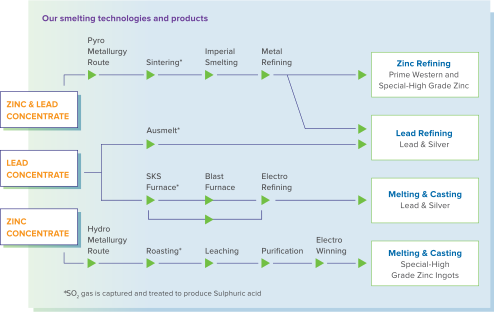
SHG (Special high grade)
HG (High grade)
PW (Prime western)
Multiple value-added products
Purity Lead
Purity Silver
Projects completed
Debottlenecked Chanderiya (Hydro II) and Dariba hydrometallurgical plants through installing new rectifiers, cooling towers, and horizontal belt filtration (HBF) units, and major pump overhauls
Installed an oxygen plant at the sinter in the pyrometallurgical plant at Chanderiya
Commissioned a new 160 ktpa roaster in Debari
Increased campaign life of the SKS plant in Dariba to the highest-ever 518 days through continuous monitoring of boiler panels and furnace brick lining
Highest-ever scrap and residue sale of ₹ 700 crore
Replacing the older star cooler setup with a packed gas cooling tower (PGCT) to upgrade gas-cooling capacity
Installing an innovative hot acid leaching plant in the Dariba cell house
Hindustan Zinc onboarded the globally renowned YKK (Yoshida Kogyo Kabushikigaisha) team for a quality inspection of the alloy plant. The visit highlighted the areas of quality improvement, while setting the foundation for high-value, quality-driven growth
Upgraded turbine blade profile for three steam turbine generator units
Maximised plant load factor (PLF) by operating units beyond technical feasibility
Increased domestic coal consumption to 53% in FY2026 vs 44% in FY2025
Operationalised a 4.8 MW solar plant in Dariba
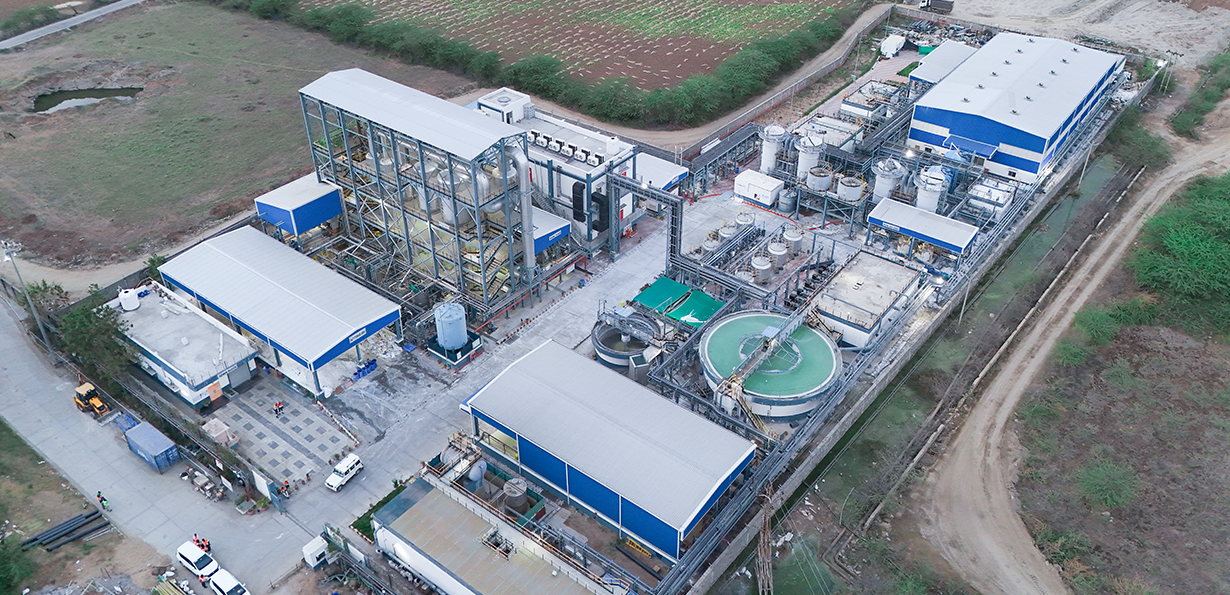
During the year, we deployed technologies like computer vision, OT-IT convergence, and AI/ML to enhance asset utilisation.
Sinter pallet grate bar monitoring and interlocking
Computer vision-based solution eliminates unplanned stoppages from grate bar anomalies in sinter machine pallets, improving plant availability and process stability
Reduction in unplanned stoppages from the pallet grate bar
Switchyard hotspot detection
Thermal vision-based solution replaces manual checks with real-time insights, enabling planned maintenance and sustained peak performance of switchyards
Reduction in production losses from unplanned switchyard outages
Process optimisation through autonomous dosing
Deployed end-to-end OT-IT integrated, ML-based autonomous dosing system, optimising non-fuel chemical consumption across smelters
Reduction in chemical consumption norms
During the year, we deployed technologies like robotic process automation and computer vision
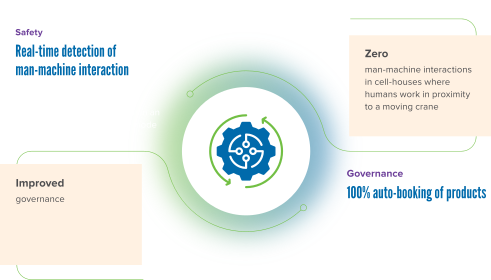
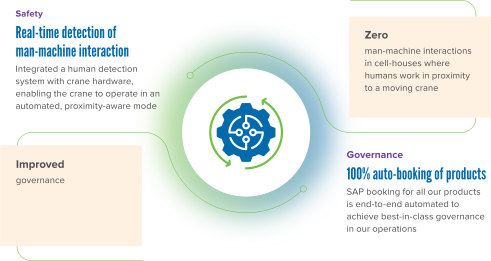
Safety at our smelters has moved decisively from procedural compliance to engineering-led elimination of risks. Key measures undertaken in FY2026 to scale process safety include:
We advanced environmental performance at our smelters across four dimensions in FY2026: