

Message
from
CEO & WTD
FY2026 was a landmark year for Hindustan Zinc, delivering record operating and financial performance through a structurally advantaged asset base and disciplined execution.
With HZL 2.0, we are deploying capital with clear value thresholds to nearly double refined metal capacity, deepen cost leadership through efficiency and renewable energy, and progress critical minerals in alignment with national priorities.
We are scaling digitalisation and automation to improve productivity and make operations safer, with safety remaining non-negotiable. We have set clear Sustainability Goals 2030 across climate, water, circularity, social impact, and responsible sourcing to strengthen resilience and long-term shareholder value creation. We thank our shareholders for their continued trust as we build a stronger, more resilient Hindustan Zinc for the next decade.

Hindustan Zinc delivered a strong performance in FY2026. What were the key highlights?
FY2026 was, by most measures, the strongest year in Hindustan Zinc's history. We achieved the highest-ever mined metal production of 1,114 kt, driven by higher ore production and better grades. Refined metal production was the second-highest at 1,048 kt, as compared to 1,052 kt in FY2025.
Refined zinc production was the best-ever at 851 kt, up 3%, supported by commissioning of smelter debottlenecking projects and a new roaster, along with pyro operations on zinc-lead mode for the full year. Silver was the standout commodity story this year. Its prices rallied to an all-time high of US$ 118.45 per troy ounce in January 2026, resulting in the precious portfolio's contribution to our profitability increasing to c.45%. The cost of production was at a five-year low.
A breakthrough was achieved in our product, EcoZen, Asia's first low-carbon zinc, as it moved from launch to industrial adoption with a strategic supply partnership with Tata Steel and Silox India. This will enable our downstream customers to lower embedded emissions across their product portfolio and mark a step forward in such adoption.
Financial performance was at an all-time high, driven by strong operational performance, 5-year lowest cost of production, and a favourable commodity environment. Overall, the year validated the strength of our portfolio and operational model.
Uncertainty and unpredictability peaked in FY2026. How did Hindustan Zinc navigate these?
The global macroeconomic environment was genuinely challenging, marked by tariff escalations, geopolitical uncertainty, and subdued industrial activities in key economies. Against this backdrop, our outperformance was not accidental, but the result of several advantages that provide resilience to macro headwinds better than most.
One of our biggest advantages is being an Indian company with significant domestic exposure. Around 70% of our refined zinc and almost 100% of silver production is sold domestically, ensuring insulation from global volatility and presence in one of the most constructive demand environments. This paid off in FY2026 as the Indian economy yet again stood out as one of the brightest spots globally. The nation's GDP grew by a projected c.7.5% with low inflation and manufacturing PMI firmly above 56 through most of the year.
Our portfolio, comprising energy transition critical metals, is also in the spotlight, supported by strong underlying fundamentals and rising demand. Zinc's role is extending beyond core steel galvanisation to renewable energy infrastructure and electric mobility applications, and in emerging technologies such as zinc-air batteries. Silver has emerged as a critical resource for a low-carbon, technology-driven world, with growing applications in solar cells, semiconductor chips, electronics, and 5G networks. This year, silver was included in the US critical minerals list, which further enhances its attractiveness among the global investor community.
We also benefited from our exceptional cost and execution discipline. Our teams ensured the scheduled commissioning of various improvement and debottlenecking projects, which contributed to record production and strengthened cost leadership quarter after quarter. Together, these efforts ensured a year of record performance.
Hindustan Zinc strengthened its position as one of the lowest-cost producers. What are the key drivers of this advantage, and how sustainable is it going forward?
Cost leadership is built into our operating models, making it sustainable. Let me explain what I mean. Our mines offer amongst the most superior ore grades globally, ensuring higher metal extracted per tonne of rock mined. This is an irreplicable geological advantage.
Energy cost optimisation is yet another critical lever. In FY2026, c.18% of our total power requirements were met by renewable energy as against c.13% in FY2025, with a clear trajectory to attain 70% by FY2028, supported by an agreement with Serentica. At the same time, we have re-engineered our captive power plants in such a manner that now we have increased the use of domestic coal to 53% versus 44% in FY2025.
The third is improved by-products realisation, which reduces the net cost of production. And finally, the technology piece, with AI, IIoT, and automation investments supporting better equipment utilisation and efficiency gains.
These efforts resulted in a 9% reduction in the zinc cost of production excluding royalty to US$ 959 per tonne in FY2026. Looking forward, we are confident of sustaining the cost of production by building on these levers, while also benefiting from economies of scale as we expand capacity.
The global metals industry is undergoing structural shifts driven by energy transition and geopolitical realignments. How is Hindustan Zinc positioned to capitalise on these changes?
At its core, energy transition is a story of critical metals. Hindustan Zinc could not be better positioned, and I say that without exaggeration.
Every galvanised steel structure across wind, solar, transmission infrastructure, or automobile requires zinc. Every solar panel and semiconductor contains silver. This means that demand for these metals is not cyclical; they are critical to support the transformation of the global energy system. It is a decadal opportunity playing out.
On the geopolitical side, deglobalisation and resource nationalism are on the rise, creating a significant opportunity for a company like ours. The Indian government is committed to domestic mining through the critical mineral mission and the global push to reduce dependence on concentrated supply chains are tailwinds for Hindustan Zinc.
As India's only primary zinc-lead-silver producer backed by premium assets, we are integral to India's critical mineral security challenge. Beyond this, we are shaping HZL 2.0, aiming to build a future-ready, diversified critical-metals company powering India's industrial, energy, and infrastructure transformation.
Aligned with this, we have laid out a roadmap to double our capacity and evolve into a multi-metal enterprise, with a focus on high-demand minerals where India is mostly import-dependent today. What lies ahead is a new beginning for Hindustan Zinc, built on stronger momentum and a transformative vision that will put us right at the centre of national self-reliance in critical minerals and global energy transition.
Where does the Company stand on its HZL 2.0 vision?
HZL 2.0 is no longer a vision. We have covered significant ground in this long-term growth journey, with the entire team rallying behind to make it possible.
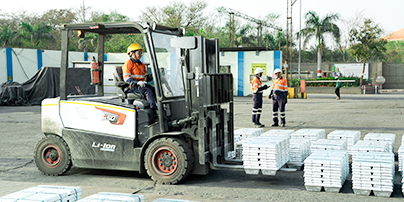
The journey is designed to nearly double refined metal capacity from 1.144 Mtpa to 2.0 Mtpa, which will strengthen our competitive positioning in the critical metal ecosystem. This year, we have already commissioned the new 160 ktpa roaster at Debari and debottlenecked smelters at Dariba and Chanderiya.
In addition to this, the Board has approved expansion projects totalling around ₹17,000 crore, including:
- 250 ktpa of integrated refined zinc capacity at Debari, with matching mines and mills expansion
- India's first tailings reprocessing plant at Rampura Agucha of 10 Mtpa feed capacity to process the legacy tailings
- Exploration programme to sustain a mine life of 25+ years even after mining expansion
We have finalised EPC partners for the smelter expansion and the tailings reprocessing plant, alongside site mobilisation. These projects are expected to be completed by Q2 FY2029 and Q4 FY2028, respectively.
On critical minerals diversification, we secured three new mineral blocks, including tungsten in Andhra Pradesh, rare earth elements in Uttar Pradesh, and potash in Rajasthan. We have received the composite licence for Tungsten block and have started the exploration activities. For other two blocks, we have received the letter of intent and exploration activities will be started in FY2027, once all necessary approvals are in place. These minerals are the backbone of the global energy transition and future technologies and present a strategic opportunity towards becoming a multi-metal enterprise aligned with national priorities.
How is Hindustan Zinc leveraging digitalisation and automation to build a more efficient and future-ready organisation?
Digital innovation is key to shaping the future of metals and mining. We are increasingly integrating innovative AI-driven monitoring, automation, and technology-led predictive systems to make operations more resilient, efficient, and safer. We have also established a first-of-its-kind digital collaboration centre that analyses data from all business units and provides real-time insights for robust decision-making.
Artificial intelligence (AI), machine learning (ML), computer vision (CV), video analytics, and sensor fusion technologies were scaled across operations for switchyard hotspot monitoring, collision avoidance, human detection with crane interlocking, rock fragmentation analysis, and chemical consumable optimisation.
Last year, we introduced collision avoidance system to strengthen our underground mobile equipment safety controls to improve situational awareness and reduce the risk of vehicle-to-vehicle and vehicle-to-person interactions in constrained underground conditions.
These efforts not only ensure the safety aspects but also contribute to cost optimisation, better asset utilisation, and improved recovery. They solidify the foundation for scalable, intelligent tech-first operations, which will be key to HZL 2.0.
Currently, through VSpark Deeptech Ventures, we are collaborating with over 30 technology startups on more than 60 projects to tackle critical business challenges. The focus is on leveraging advanced technologies to drive large-scale, transformative impact in production, cost optimisation, value creation, ESG leadership, and safety practices.
How is Hindustan Zinc unlocking new growth opportunities through innovation and diversification?
Our innovation efforts are focused on unlocking greater value from existing operations while building new growth avenues. In FY2026, we made breakthroughs in process innovations to improve lead-silver recovery, enhance metal grade, and optimally use waste. Our waste-to-wealth program included waste dumping in the underground mine without transporting it to the surface, converting Jarosite, manganese residue, sodium salt, and calcium residue into commercially valuable products.
Our 30 ktpa zinc alloy plant, operated by subsidiary Hindustan Zinc Alloys Private Limited, produced 13.7 ktpa alloys during the year. This not only enhanced the share of the VAP portfolio to c.22%, but also helped cater to the untapped demand for specific alloys such as die-casting alloys, etc.
Additionally, efforts are underway to unlock new revenue streams. Our DAP/NPK plant is progressing for scheduled commissioning in Q2 FY2027, which will position us to effectively cater to the demand of fertiliser industries. We are also progressing innovation in zinc air batteries and zinc alloys to target emerging areas.
As mining activity expands, how is Hindustan Zinc ensuring that growth remains responsible, sustainable, and aligned with global standards?
This is a question that interests me most, because it goes to the heart of what kind of company we want to be as we grow.
The most significant step forward has been our membership in the International Council on Mining and Metals (ICMM), placing us in a community of the world's most responsible mining companies. It would require us to adhere to ICMM's rigorous performance expectations across environmental, social, and governance dimensions, learn from peers, and continuously raise our standards as global best practices evolve. We have already completed the ICMM assessment, and actions are being deliberated to strengthen our positioning as a sustainable global metal and mining leader.
Our Chanderiya Lead Zinc Smelter and Rampura Agucha Mine have become India's first sites to receive the Zinc Mark and Copper Mark certification, a testament to our commitment to responsible resource use, lower environmental impact, and industry-leading standards.
Post achieving our 'Sustainability Goals 2025', well ahead of schedule, this year, we launched a more ambitious 'Sustainability Goals 2030'. These goals span themes of climate action, water stewardship, biodiversity conservation, workplace safety and well-being, responsible sourcing, circular economy, workforce diversity, and social performance.
I must note here that responsible growth at Hindustan Zinc is as much about financial discipline as it is about sustainability. Our focus on mining efficiently, optimising resource use, ensuring inclusive growth, and operating within globally benchmarked frameworks lowers operational, regulatory, and reputational risk. That translates into a more resilient business model over time with predictable returns. It also places us at the forefront of India's resource-led economic growth story.
ESG is a clear priority for the Company. What metrics and milestones should shareholders track to assess progress?
We want our ESG progress to be transparent and comparable, with clear milestones. Shareholders can track: (i) climate: 70% renewable power by FY2028; 50% reduction in Scope 1 & 2 emissions and 25% reduction in Scope 3 emissions by 2030 (from the FY2020 baseline), on the pathway to Net Zero by 2050 or sooner; (ii) water: 50% reduction in freshwater consumption by 2030 and 100% low-quality water for smelting; (iii) circularity: near-to-zero waste to landfill (>90%) for smelting process waste by 2030; (iv) nature: halt and reverse biodiversity loss and achieve no net loss at mine sites by closure; (v) social performance: positively impact 0.5 million lives and build employability for 30,000 individuals by 2030; and (vi) responsible sourcing: 100% active supplier evaluation on ESG/risk and 25% of procurement spend from local business partners by 2030 (base year FY2025). These milestones reflect our Sustainability Goals 2030 and our belief that responsible, measurable progress strengthens resilience and long-term shareholder value.
How do you view the industry scenario and Hindustan Zinc's priorities going forward?
Headed into FY2027, we expect a phase of cautious optimism. While the global economic environment may remain tepid due to geopolitical uncertainties, the commodity markets are expected to offer upside potential driven by steady demand from key downstream industries.
India, in particular, has an exciting outlook. Sustained infrastructure investment, rising steel demand, and expansion in industrial activity, especially in energy transition and technology-led sectors, are set to sustain market momentum and commodity demand.
Hindustan Zinc is advancing this market with confidence. Our priorities of doubling capacities and progressing towards becoming a multi-metal enterprise through broadening the critical minerals portfolio are aligned with this opportunity. This is backed by a solid foundation in a large reserve and resource base, a disciplined execution track record, and people, technology, and operational excellence. Our robust balance sheet, sustained low cost of production, and best-in-class assets give us the strength to invest through cycles and seize opportunities emerging from a favourable commodity environment.
Together, these priorities position us to navigate near-term uncertainties and create long-term value for all our stakeholders.
Technology and automation are important themes. How are you strengthening safety culture and building capabilities for the next phase of growth?
Technology helps, but safety is non-negotiable. As we scale, we are reinforcing prevention through stronger standards, frontline leadership routines, tighter contractor integration and digital tools for real-time hazard controls. In parallel, HZL 2.0 needs new capabilities in project delivery, exploration, digital operations, and sustainability. We are building these through structured training, selective hiring, and leadership development, so we can execute growth safely, predictably, and with discipline.
Thank you for your continued trust and support.
Arun Misra
Chief Executive Officer & Whole-time Director