Consolidated Financial Performance
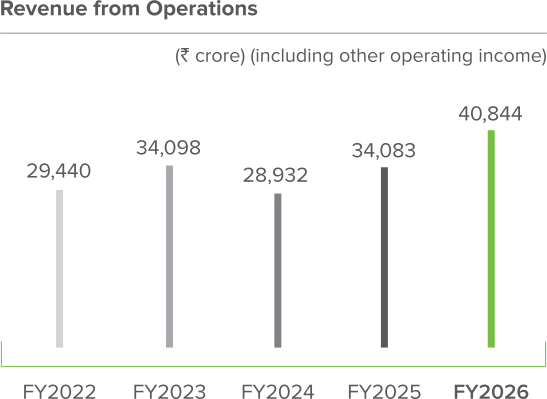
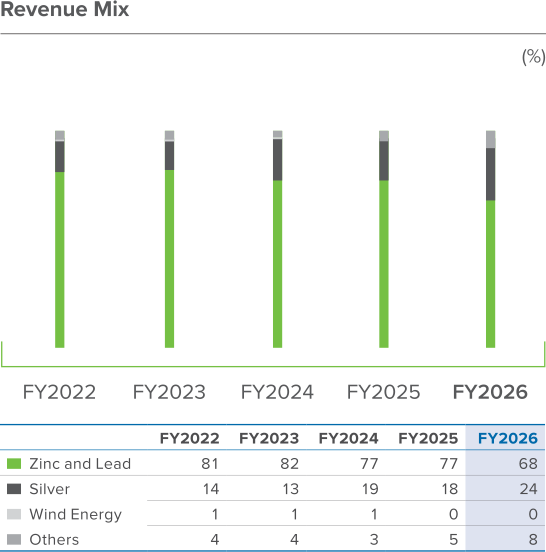
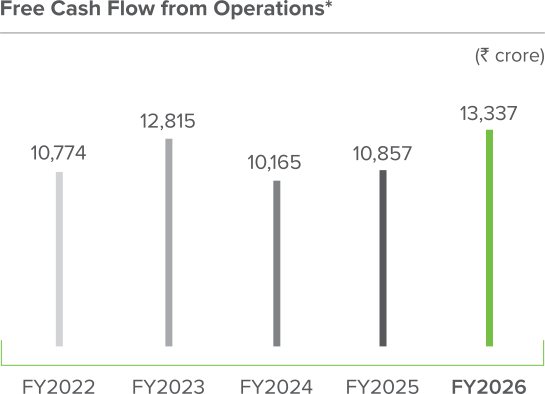
* Free cash flow from operations before growth capex and investments in renewable energy
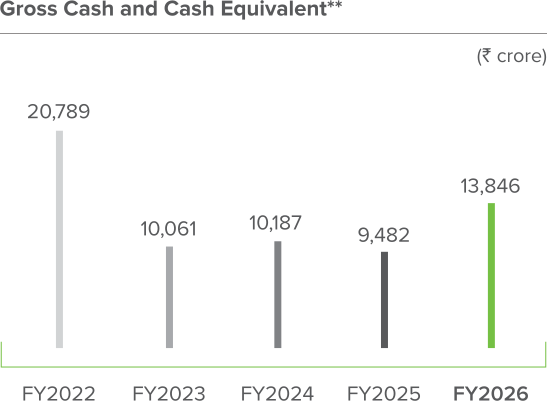
** Includes cash and cash equivalents, investments as applicable, and other bank balances excluding dividend account balance
Segment-wise Performance
Base Metal Performance
Precious Metal Performance
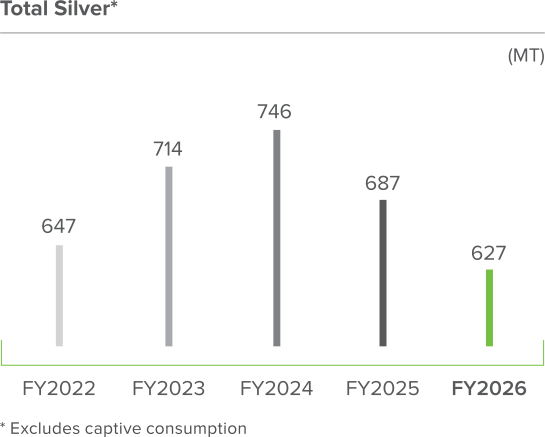
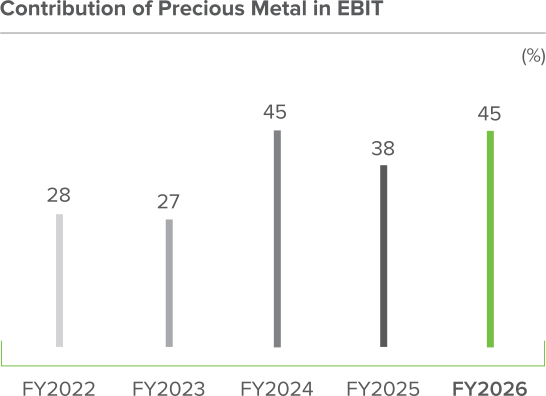
With the global shift towards clean energy, silver has become increasingly important in the production of photovoltaic cells used in solar panels, making it a key component in the transition to renewable energy sources. Its unique characteristics make it irreplaceable in many modern and sustainable technologies. Over last 2 decades, Hindustan Zinc grew its silver portfolio by over 20 times from 24 tonnes to 627 tonnes in FY2026 and is among the top 10 silver producers globally.
Key Performance Ratios
Description
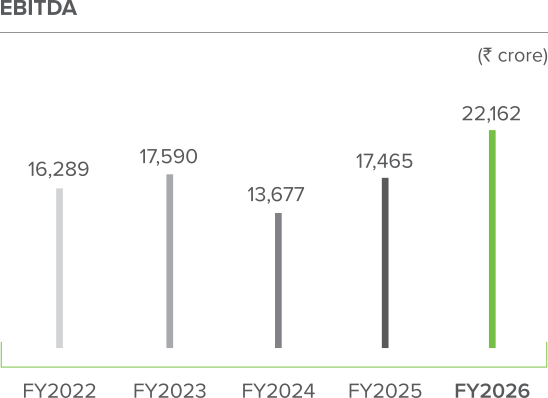
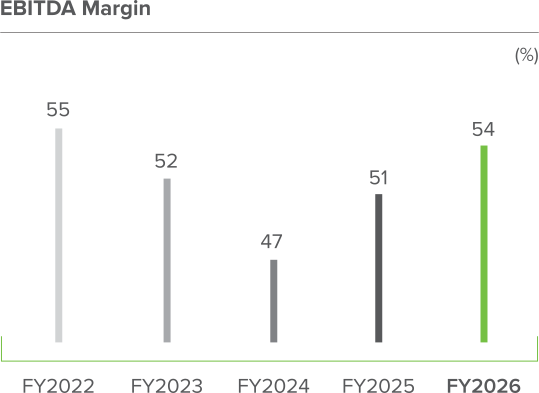
Earnings before interest, tax, depreciation and amortisation (EBITDA) is a factor of volume, prices, and cost of production. This measure is calculated by adjusting operating profit for special items and adding depreciation and amortisation and dividing it by revenue from operations.
Management Statement
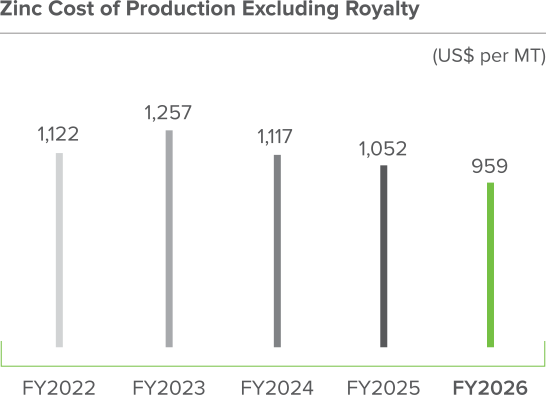
EBITDA margin increased from 51% in FY2025 to 54% in FY2026 in line with better zinc and silver prices, favourable exchange rate, and lower cost of production, partly offset by losses from strategic hedging initiative, lower lead prices, and lower silver volume.
Description
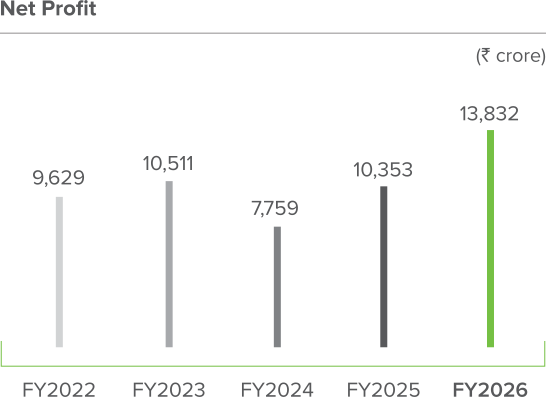
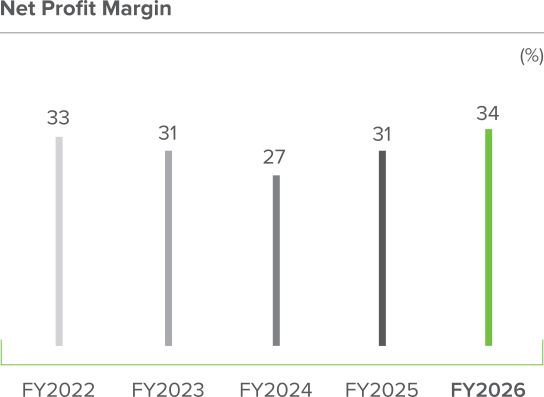
This is a measure of the profitability of a company. It is calculated as a ratio of net profit (before exceptional items) to revenue from operations (including other operating income).
Management Statement
Net profit margin is higher on account of higher EBITDA and a lower interest expense, offset by higher depreciation and amortisation and a lower effective tax rate in the base period (due to one-time reversal of tax provisions).
Description
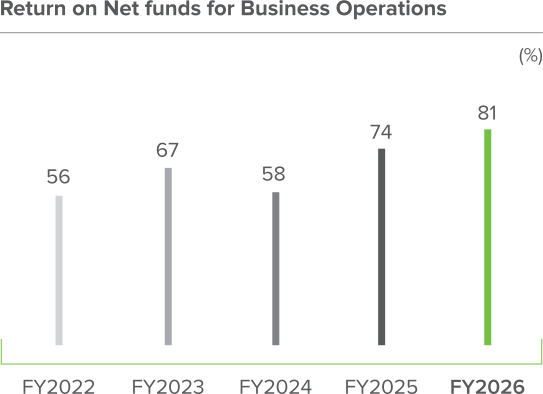
This is calculated on the basis of operating profit net of tax expenses, as a ratio of net funds for business operations. The objective is to earn a post-tax return consistently above the weighted average cost of capital.
Management Statement
Increase in return on net funds for business operations is mainly on account of higher operating profit net of taxes partially offset by higher net funds employed for business operations.
Description
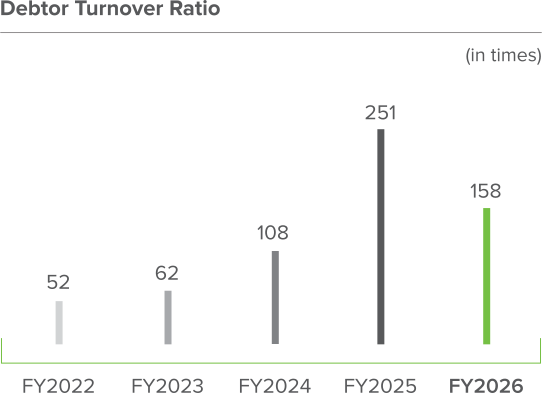
The debtor turnover ratio is an accounting measure used to quantify a company's effectiveness in collecting its receivables. This is calculated as a ratio of revenue from operation (including other operating income) to average trade receivables.
Management Statement
Decrease in debtor turnover ratio is primarily on account of higher trade receivables as compared to the previous year.
Description
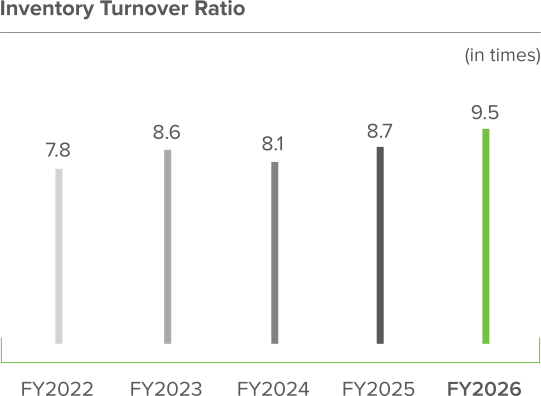
The inventory turnover ratio is an efficiency ratio that shows how effectively inventory is managed. This is calculated as a ratio of cost of goods sold to average inventory.
Management Statement
Inventory turnover ratio was marginally higher on account of higher cost of goods sold.
Description
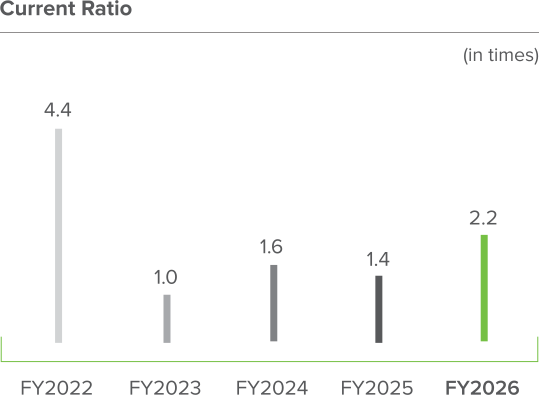
The current ratio is a liquidity ratio that measures a company's ability to pay short-term obligations or those due within one year. This is calculated as a ratio of current assets to current liabilities.
Management Statement
Current ratio is higher mainly on account of increase in current investments.
Description
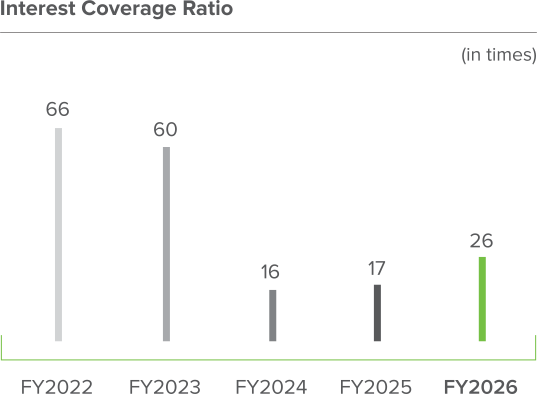
The ratio is a representation of the ability of the Company to service its debt. It is computed as a ratio of EBITDA divided by finance costs.
Management Statement
The interest coverage ratio is higher on account of higher EBITDA and lower finance cost.
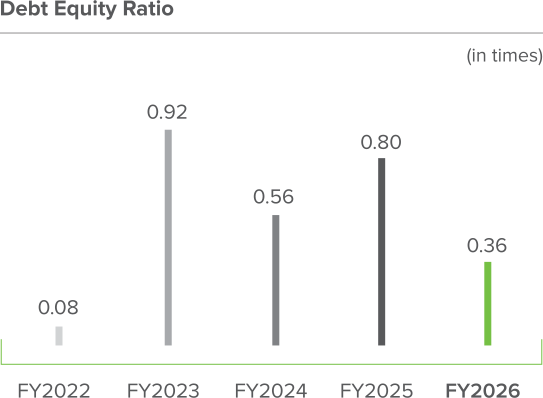
Description
The Debt Equity Ratio reflects the Company's ability to meet its short-term and long-term obligations in proportion to the net worth of the Company.
Management Statement
Debt Equity Ratio is lower on account of lower borrowings and higher shareholders' equity.
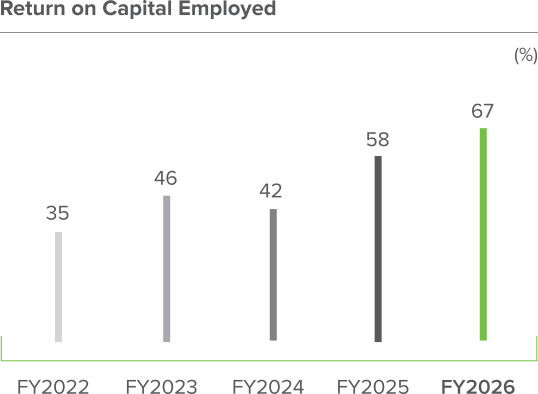
Description
Return on capital employed is calculated as a ratio of earnings before interest and taxes (EBIT) to average capital employed (capital employed = net worth + total debt).
Management Statement
Return on capital employed has increased due to higher EBIT partially offset by higher average capital employed.
Description
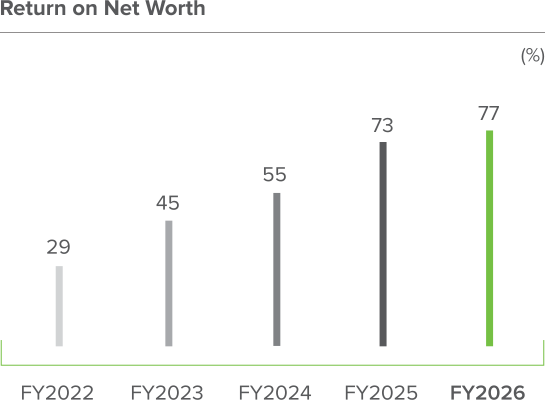
Return on net worth is a measure of the profitability of the Company. This is calculated as a ratio of net profit (before exceptional items) to average net worth (share capital + reserves).
Management Statement
Return on net worth is higher mainly on account of higher net profits after tax partially offset by higher net worth.
Economic Value Added
Economic value added (EVA) is a measure of a company's financial performance based on income generated post charging for the cost of capital provided by lenders and shareholders. It represents the value added for the shareholders by generating operating profits in excess of the cost of capital employed in the business.
| (₹ crore) | FY2022 | FY2023 | FY2024 | FY2025 | FY2026 |
|---|---|---|---|---|---|
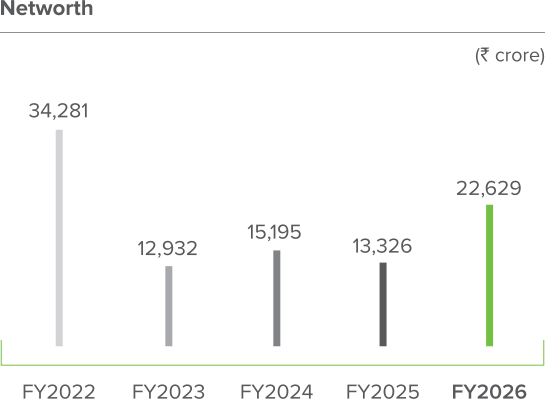
| Equity | 15,195 | 12,932 | 34,281 | 32,313 | 22,629 |
| Capital employed | 13,464 | 14,712 | 16,315 | 17,183 | 17,035 |
| Average capital employed | 14,088 | 15,513 | 16,749 | 17,948 | 15,765 |
| Economic Value Added | |||||
| Net operating profit after taxes (NOPAT) | 7,828 | 9,925 | 9,205 | 7,031 | 13,852 |
| Cost of capital (COC) | 1,817 | 2,444 | 1,950 | 2,131 | 2,209 |
| Economic Value Added (EVA) | 6,011 | 7,481 | 7,255 | 4,900 | 11,643 |
| NOPAT/Average capital employed (%) | 55.6% | 64.0% | 55.0% | 39.2% | 87.9% |
| Weighted average COC (%) | 12.9% | 15.8% | 11.6% | 11.9% | 14.0% |
| EVA/Average capital employed (%) | 42.7% | 48.2% | 43.3% | 27.3% | 73.9% |
Additional Information
NOPAT: Net operating profit after tax (NOPAT) is a financial measure that shows how well a company performed through its core operations, net of taxes. It is calculated as profit after depreciation and tax, but before interest.
Cost of Capital: Cost of capital is the return expected by investors to compensate them for the variability in return caused by fluctuating earnings and share prices.
Capital Employed: Capital employed is the total amount of funds deployed in the business in order to generate profit exclusive of net cash and cash equivalents.
ESG Outcomes
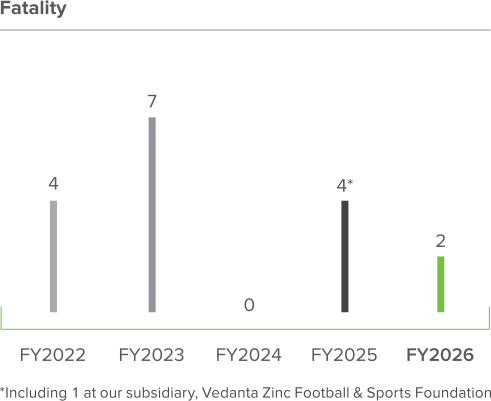
Our Environmental, Social and Governance (ESG) focus has enabled us to deliver sustained performance and growth across key ESG metrics. We are continuously working towards reducing our carbon footprint and lowering the impact of our business on environment through our concerted efforts. These efforts are aimed at improving operational efficiencies, ensuring optimal utilisation of natural resources, and increasing the use of renewable energy in our plants and processes. Safety and health of our workforce, and at our workplace, is central to our ESG strategy.
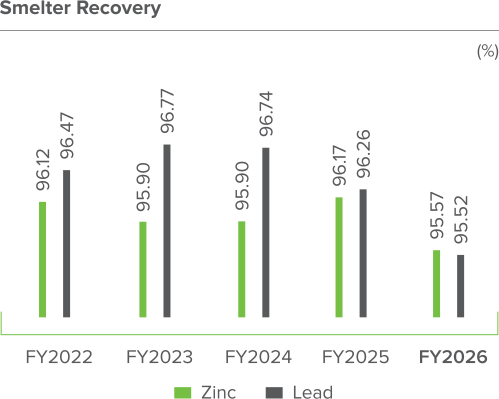
Metal Recovery Performance
-graph28-white.svg)
-graph28.svg)
graph29-white.svg)
graph29.svg)
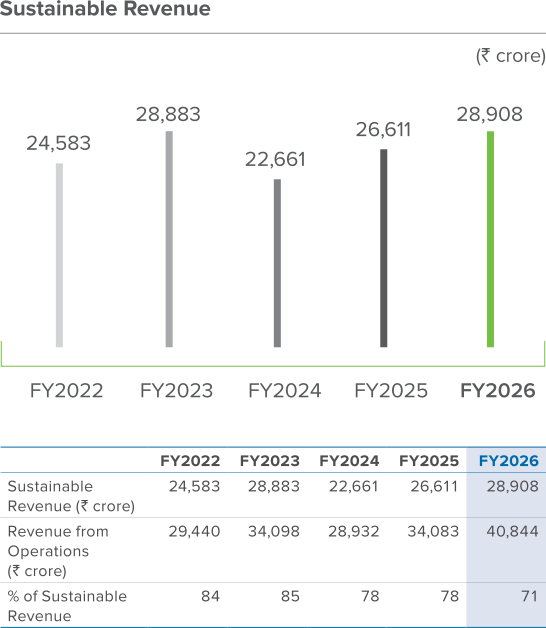
Sustainable Revenue Disclosure
Hindustan Zinc classifies revenue as sustainable where products align with EU Taxonomy activities, contribute to environmental objectives, and meet do-not-significant-harm criteria.
Covered categories: Zinc for galvanisation and long-life through corrosion-protection, recycled/by-products including sulphuric acid, wind power generation, lead for energy storage (lead-acid batteries), and other by-products and reprocessed waste from smelting process.
The assessment is based on internal evaluation and will be externally validated going forward.